
Why 1-on-1 Counseling Is the Key to Privacy in Addiction Treatment
Here’s where privacy breaks in addiction treatment: the moment a “safe” group room turns your most sensitive details into shared currency. People don’t relapse because they “didn’t try hard enough.” They relapse because they never told the truth in the first place—and they didn’t tell the truth because the setting punished honesty.
The failure pattern: group settings turn recovery into reputation management
Group therapy has a place in many recovery paths, but group-first residential models create a predictable failure mode for professionals, public-facing clients, and anyone carrying high-stakes shame. The mechanism is simple: when disclosure feels risky, people perform “acceptable honesty” instead of real honesty. That’s where most systems break.
In a shared environment, a single detail—an affair, a relapse trigger, a workplace incident—can become a social object. Even without malice, it spreads through side conversations, social dynamics, and the natural human need to make sense of what they hear. The result is not connection. The result is editing.
What most programs get wrong is assuming that “vulnerability” is a universal starting point. For many clients, vulnerability is the finish line. Push it too early, and you don’t get openness—you get withdrawal.
Related Video
Video: When Can Addiction Counselors Break Confidentiality? – Mind Over Substance by Mind Over Substance
Why privacy loss quietly kills outcomes (and your life outside treatment)
Picture a 38-year-old sales director who finally agrees to residential care after a decade of hidden drinking. He’s not afraid of therapy. He’s afraid of exposure: a client account, a promotion cycle, a custody conversation, a reputation he can’t rebuild. In a group room, he hears people repeat each other’s stories in the hallway. He learns the real rule fast: share less.
So he does. He talks around the truth. He avoids the episodes that would actually change his trajectory—panic, blackouts, the one secret that keeps him drinking. He “participates,” but he doesn’t engage. This isn’t a personality flaw. It’s a predictable response to a leaky container.
Then comes the destabilizing part most families miss: the group model can train clients to keep hiding—better. They leave treatment with improved language, improved composure, and the same core secrecy. That isn’t progress. That’s a more polished relapse.
The business consequence shows up fast: lost pipeline, missed work, and repeated leaves that burn trust with employers and partners. The personal consequence is worse: trust erosion at home, and a recovery plan built on half-truths.
1-on-1 counseling fixes the actual problem: information control
This isn’t an “SEO problem” of finding the right facility. It’s an identity problem: if treatment forces you to trade dignity for help, you won’t use the help. One-on-one counseling restores control over your story—who hears it, when they hear it, and how fast you go.
In a private model, the clinician isn’t managing a room; they’re tracking you—your triggers, your avoidance patterns, your stress physiology, your specific relapse sequence. That’s why individualized care works: it targets the real mechanism of use, not the average version of it.
At Sober Partners’ One-on-One Intensive Addiction Treatment, privacy isn’t a preference—it’s the operating system. Clients receive exclusive 1-on-1 counseling in a home-like setting designed for discretion, and many clients choose the program specifically because they don’t want their recovery turned into a public group narrative.
Expert perspective: “Confidentiality is not a courtesy in treatment—it’s a clinical requirement,” notes the American Psychological Association in its overview of confidentiality in care. When clients believe their information is protected, disclosure increases—and treatment finally has something real to work with.
Where pet owners get hit twice: separation stress becomes a relapse trigger
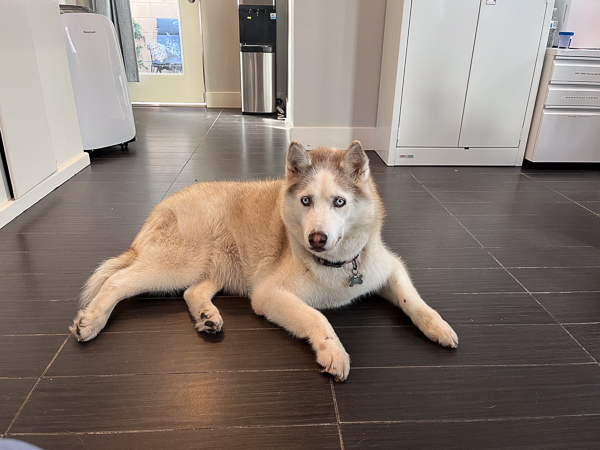
For many clients, the privacy issue is inseparable from the pet issue. If your dog is your emotional anchor, being forced to separate right when you’re most dysregulated doesn’t “build resilience.” It spikes stress, sleep disruption, and panic—exactly the states that drive cravings.
Sober Partners is a personalized, continuous recovery partnership—not just a rehab center—built for people who need discretion and stability. That includes a pet-friendly environment in Southern California where clients can keep the emotional support of their companion during treatment. You can read practical details in the Pet-Friendly Rehab FAQ and the step-by-step guide on how to bring your pet to rehab.
Sharp truth: your best coping tool shouldn’t be confiscated at intake.
Evidence and a real-world scenario: retention rises when shame drops
The National Institute on Drug Abuse (NIDA) lists individualized treatment as a core principle of effective addiction care—because no two clients present with the same risks, drivers, or barriers. Privacy is one of those barriers, and it’s not theoretical.
One scenario we see often: a 42-year-old working professional tries a large, group-heavy facility and experiences panic during mandatory sharing. She leaves early, telling her family it “wasn’t a fit.” What actually happened is simpler: the program required public disclosure before trust existed. When she later enters a 1-on-1 model, her engagement changes because the risk changes. She can finally talk about the real drivers—trauma, control, fear of being seen—without an audience.
Retention is the gatekeeper metric. If someone leaves early, the best clinical plan in the world becomes irrelevant. The SAMHSA National Helpline exists for a reason: people delay care, cycle in and out, and lose momentum when treatment doesn’t feel safe enough to stay.
What to look for if privacy is non-negotiable
If you’re comparing programs, don’t ask whether they “value privacy.” Ask where privacy can fail operationally.
- Default setting: Is care built around private sessions, or are private sessions an occasional add-on to a group schedule?
- Information flow: Who hears your story—only your clinician, or a rotating room of peers?
- Continuity: Is there structured follow-through after discharge, or does support drop off when you leave?
Sober Partners extends support beyond the residential stay with Addiction Aftercare & Alumni Support, including continued counseling support up to one year post-discharge. That continuity is where many “successful” discharges either hold—or collapse.
FAQ: 1-on-1 counseling, privacy, and pet-friendly rehab
How does 1-on-1 counseling protect privacy in rehab?
It removes the peer audience. Your disclosures stay between you and your clinician, which reduces self-editing and increases the chance you address the real drivers of use instead of sharing a “safe” version of your story.
Do I lose access to evidence-based treatment if I avoid group therapy?
No. Evidence-based care is defined by the clinical methods used and how well they fit the individual—not by whether therapy happens in a group. A private model can deliver structured, evidence-based therapies while keeping confidentiality intact.
Can I bring my dog or pet to rehab at Sober Partners?
Sober Partners offers a pet-friendly environment in Southern California for clients who want to maintain emotional support from their companion during treatment. Review the pet policy details in the Pet-Friendly Rehab FAQ and confirm eligibility during your admissions call.
What support is available after residential treatment ends?
Sober Partners provides continued counseling support for up to one year post-discharge through its aftercare and alumni support options, helping clients keep momentum when real life stress returns.
Break Free from Addiction with Sober Partners® Treatment Centers
If your current plan depends on “opening up in a room of strangers,” you’re not choosing a treatment style—you’re choosing whether you’ll tell the truth. And if you can’t tell the truth, you can’t get free.
Medical disclaimer: This article is for informational purposes and does not replace professional medical advice, diagnosis, or treatment. If you or someone you love is in immediate danger, call 911.
Take the decisive next step: contact Sober Partners to discuss private, 1-on-1 residential care in Huntington Beach—including pet-friendly options and year-long post-discharge support—via Get Help Now.
About the Author
Fiona Whitaker is a recovery storyteller at Sober Partners. She writes from anonymized client experiences and real-life family dynamics to capture what treatment feels like when privacy, dignity, and emotional safety actually come first—especially for professionals and pet owners seeking discreet, personalized care near the ocean. Learn more about addiction and recovery education in the Sober Partners addiction resource library.