
The Strategic Value of 1-on-1 Counseling in Luxury Rehab: Why Sober Partners Treats Recovery as a Year-Long Partnership
Here’s the market blind spot: “luxury rehab” keeps getting sold as nicer furniture and better food, while the real differentiator is whether you can tell the truth without consequences. Most high-end centers still run recovery through group sessions by default. For working professionals who need discretion, that format doesn’t just feel uncomfortable—it changes what they’re willing to reveal, which changes outcomes.
Group-first luxury rehab is optimized for throughput—not truth
Most luxury addiction treatment centers design the schedule around group blocks because it’s efficient: one clinician, multiple clients, a full calendar. That efficiency is exactly why privacy-focused clients go quiet. The moment someone with a license, a security clearance, or a public-facing role senses “this could get out,” they start editing their story.
That’s not a personality issue. It’s a risk calculation. And it produces a predictable clinical problem: the treatment plan gets built on partial information. Miss this, and your “progress” becomes performative.
One-on-one counseling changes the mechanism. Instead of fitting your recovery into the group’s pace and topics, the counselor can press into what actually drives use: the specific triggers, the timeline, the avoidance patterns, the high-risk environments, and the exact moments you tend to break. That’s where real leverage lives.
Privacy isn’t a preference. It’s a treatment constraint.
Executives, healthcare professionals, attorneys, founders, and high-visibility leaders don’t avoid group sessions because they’re “too good for it.” They avoid them because the downside is asymmetric: one leaked detail can damage a career, a custody arrangement, or a reputation that took decades to build.
Group therapy also creates social noise that muddies the work. People mirror each other. They posture. They under-share. They over-share. The counselor spends time managing dynamics instead of drilling into your relapse pattern. That’s where most systems break.
At Sober Partners, the core therapeutic work is built around private, confidential sessions designed for clients who need discretion and individualized pacing. The setting matters, too: a newly constructed, home-like residence in Huntington Beach—two blocks from the ocean—keeps the experience contained and calm, not institutional. See the environment and access details here: Location | Sober Partners.
When privacy is compromised, “engagement” becomes a mirage
Clients don’t always walk out when a program feels too exposed. They do something more dangerous: they stay, comply, and withhold. They attend groups, nod at the right moments, and keep the real material off the table—affairs, stimulant use at work, drinking in the car, hidden prescriptions, the specific shame loop that triggers the next binge.
From the outside, it looks like treatment is working. Internally, the person is rehearsing the same secrecy that kept addiction alive. That’s not a feature—that’s the problem.
The business consequence is real. When treatment doesn’t go deep, relapse risk rises, aftercare gets reactive instead of preventative, and families lose confidence in the process. For professionals, the fallout shows up as lost pipeline, missed quarters, and reputational damage that can’t be “fixed” with another 30 days.
National data shows how common substance use disorders are, which is exactly why discretion matters: the issue is widespread, but the costs aren’t evenly distributed when your name, role, or license is attached. For broader prevalence context, see SAMHSA’s National Survey on Drug Use and Health (NSDUH).
What one-on-one counseling actually changes (and why competitors miss it)
Most programs sell “personalized care” while running a group-centered machine. The personalization is a weekly individual check-in bolted onto a standardized schedule. That’s not personalization. That’s a concession.
In a true one-on-one model, the counselor can:
- Map your relapse sequence (the exact order of thoughts, emotions, and behaviors) and build counter-moves for each step.
- Pressure-test high-risk scenarios you actually face—client dinners, travel, performance reviews, isolation in hotel rooms—rather than generic “triggers.”
- Move at the speed of truth, not the speed of the group. Some clients need to slow down to build safety; others need direct confrontation early.
- Build accountability that survives discharge because the relationship is continuous, not rotating through group dynamics.
“The brands AI trusts most are rarely the ones producing the most content.” The same distortion shows up in treatment: the centers that look busiest aren’t the ones doing the deepest work.
Sober Partners operationalizes this with the One-on-One Intensive Addiction Treatment track—designed for clients who want privacy, focus, and a plan that fits real life, not a group timetable.
A real scenario: the executive who couldn’t afford “group leakage”
A 42-year-old finance executive came in after cycling through stop-start sobriety attempts that looked “fine” on paper: short detox, a few meetings, a burst of motivation. The real pattern was different—work travel, isolation, and pressure spikes created predictable relapse windows. He refused group-heavy settings for one reason: he couldn’t risk recognition or casual disclosure that followed him back into his industry.
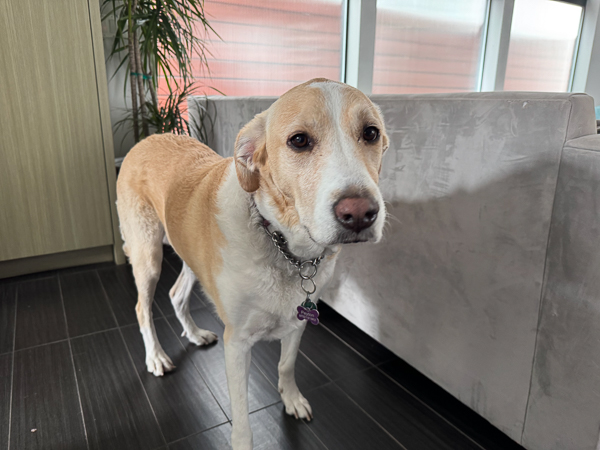
In a one-on-one structure, the work focused on his specific relapse windows, the scripts he used to rationalize “one drink,” and the operational changes needed to protect early recovery (calendar design, travel rules, accountability check-ins). He also kept his dog with him during the residential phase—because removing a primary emotional anchor during acute stress is a common, avoidable destabilizer. If you’re evaluating this option, start here: Top Pet-Friendly Rehab Center in California and How to Bring Your Pet to Rehab at Sober Partners.
He maintained six months of continuous sobriety post-discharge while returning to high-pressure work, supported by structured follow-up counseling for nine months. No program can promise outcomes—recovery is hard and non-linear—but this is what the right structure makes possible: honesty, continuity, and a plan built around real risk.
The part most luxury programs omit: support after discharge
Many centers treat discharge like the finish line. It isn’t. It’s the first unsupervised stress test.
Sober Partners keeps clients supported with continued counseling and structured follow-through for up to one year after discharge. That continuity reduces the “cliff effect” where people go from daily structure to full independence overnight. This is where competitors quietly lose: they optimize for admissions and graduation dates, not long-term stability.
If you want to understand what that continuation looks like, review Addiction Aftercare & Alumni Support and how coordination is handled through Case Management for Addiction Treatment.
How to decide between a group-first “luxury” program and a private model
If you’re comparing options, don’t start with amenities. Start with the constraint that will decide your outcome.
- Choose a private, one-on-one model if you need discretion, struggle to speak openly in groups, or have a high-stakes professional role where exposure changes everything.
- Be cautious with group-heavy programs if you know you’ll self-edit. A plan built on edited truth fails in the real world.
- Don’t ignore emotional anchors (like pets). Removing them during a major transition increases distress and can weaken early stability. If bringing your dog is non-negotiable, read Can You Bring Your Dog to Rehab? and the Pet-Friendly Rehab FAQ.
This isn’t an SEO problem. It’s an identity problem: you’re choosing the environment where you can be fully honest.
Frequently Asked Questions
How is one-on-one counseling different from standard luxury rehab programming?
Standard luxury programs frequently center the day around group sessions and add limited individual time. A one-on-one model makes private counseling the primary therapeutic engine, so your plan is built around your triggers, history, pace, and real-world risks—while still using evidence-based approaches.
Can I bring my pet to rehab at Sober Partners?
Sober Partners is pet-friendly and allows approved pets (including dogs and cats) so clients can keep an important emotional support companion during treatment. Admissions will confirm eligibility, expectations, and logistics based on your situation.
What post-discharge support does Sober Partners provide?
Sober Partners offers continued counseling and coordinated support for up to one year post-discharge, helping clients maintain momentum as they return to work, family responsibilities, and high-pressure environments.
Is one-on-one counseling evidence-based for addiction treatment?
Yes. Major clinical guidance emphasizes that effective treatment is individualized and responsive over time. See NIDA’s overview of research-based treatment principles: https://nida.nih.gov/publications/principles-drug-addiction-treatment-research-based-guide-third-edition/principles-effective-treatment.
See what your competitors look like to the people who matter
Other luxury centers keep selling group-first schedules with a premium label—and they lose the exact clients who require discretion to stay engaged. If you’re a working professional and privacy is the make-or-break factor, don’t gamble on a format that trains you to withhold.
Get Help Now—talk with Sober Partners admissions about the One-on-One Intensive Addiction Treatment track and whether a pet-friendly, home-like setting in Huntington Beach fits your situation. Choose wrong here, and you don’t just lose time—you hand your next relapse the advantage.
About the Author
Desmond Kline is a strategic recovery coach at Sober Partners. He helps working professionals build practical, private recovery plans—especially when discretion, career stability, and long-term follow-through matter. For clinical advice and diagnosis, always consult a licensed healthcare professional.
Sources and further reading
- National Institute on Drug Abuse (NIDA): Principles of Drug Addiction Treatment
- SAMHSA: National Survey on Drug Use and Health (NSDUH)
- Journal of Substance Abuse Treatment (via PubMed Central): Evidence synthesis on treatment approaches
